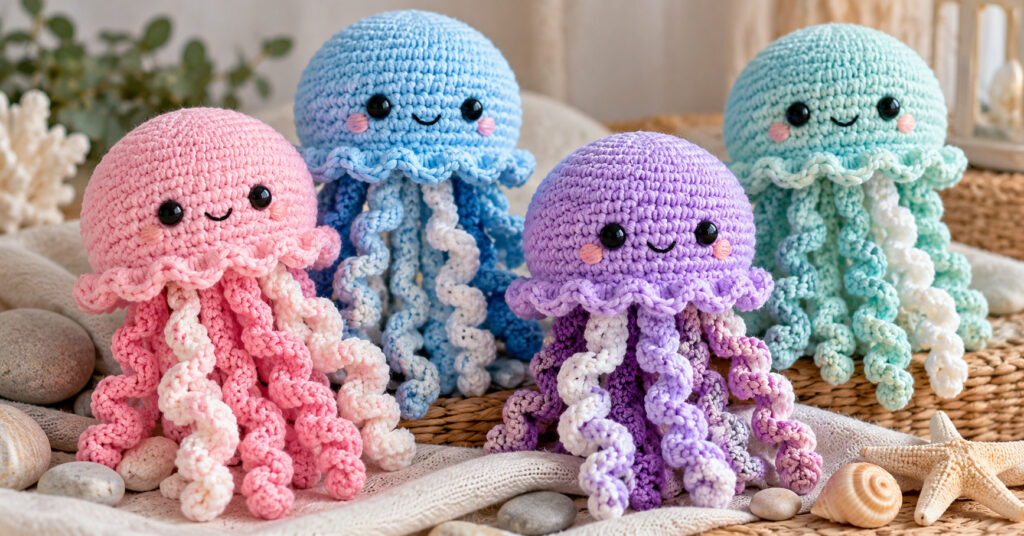
There is something strangely adorable about a crochet jellyfish. Maybe it is the round little body, the soft tentacles, or the fact that you can make one in almost any color you like.
A crochet jellyfish is also a great project if you are getting into amigurumi. The basic shape is simple, the project does not require a huge amount of yarn, and you can make the design as colorful, tiny, soft, or playful as you want.
In this guide, we will look at everything you need to know about making a crochet jellyfish, from choosing yarn and a hook to shaping the body and creating curly tentacles.
Why Crochet Jellyfish Are So Fun to Make
Jellyfish are one of those crochet projects where a simple shape can turn into something really cute.
You do not need complicated shaping to create the basic body. Once you understand increases, decreases, and a few basic crochet stitches, you can experiment with different sizes and styles.
They are also excellent for using leftover yarn. A few small amounts of contrasting colors can be enough to create colorful tentacles or decorative details.
And honestly, they are hard to make look boring.
What You Need for a Crochet Jellyfish
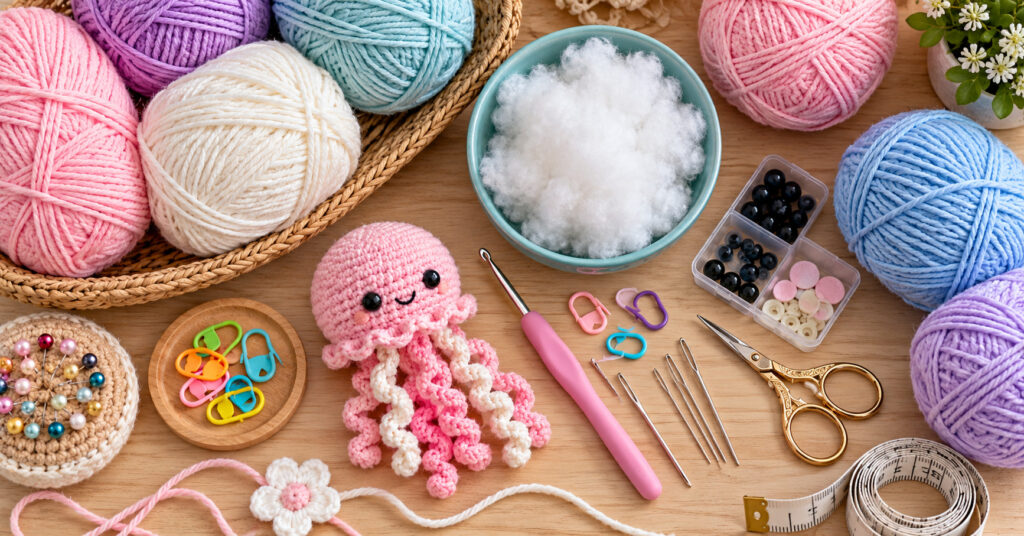
Before starting your project, gather a few basic supplies.
You will usually need:
- Medium-weight or plush yarn
- A crochet hook suitable for your yarn
- Polyester stuffing
- Yarn needle
- Scissors
- Stitch marker
- Safety eyes or embroidery thread for the face
For a softer plushie, velvet or chenille yarn can give the jellyfish a completely different personality. Cotton yarn, on the other hand, makes the stitches easier to see and can be a good choice when you are still learning amigurumi.
Choosing the Right Yarn
The yarn you choose can change the entire appearance of your jellyfish.
Cotton creates a cleaner and more defined look. Chenille and velvet yarn create something much softer and more cuddly.
If you are making your first amigurumi jellyfish, I would recommend starting with a yarn that allows you to clearly see your stitches.
Once you feel comfortable with the construction, try fluffy yarn for a more plush finish.
What Crochet Hook Size Should You Use?
There is no single hook size that works for every jellyfish.
Your yarn label usually gives you a recommended hook range, but amigurumi often benefits from using a slightly smaller hook so the finished fabric stays tight.
You want the stitches to be close enough that the stuffing does not easily show through the body.
If you can clearly see large gaps between your stitches, try going down a hook size.
Basic Stitches You May Need
A beginner-friendly jellyfish can be made using a surprisingly small collection of stitches.
You may come across:
- MR — Magic Ring
- CH — Chain
- SC — Single Crochet
- INC — Increase
- DEC — Decrease
- SL ST — Slip Stitch
If you already know single crochet, increases, and decreases, you have most of the skills needed to start.
The Basic Shape of a Crochet Jellyfish
The body is usually created as a rounded or dome-like shape.
You begin with a small center and gradually increase the number of stitches. After reaching the widest point, the rounds become more consistent before decreasing toward the bottom.
This creates the familiar rounded jellyfish head.
The exact number of rounds depends on the size and style you want, so there is plenty of room to experiment.
A Simple Beginner-Friendly Construction
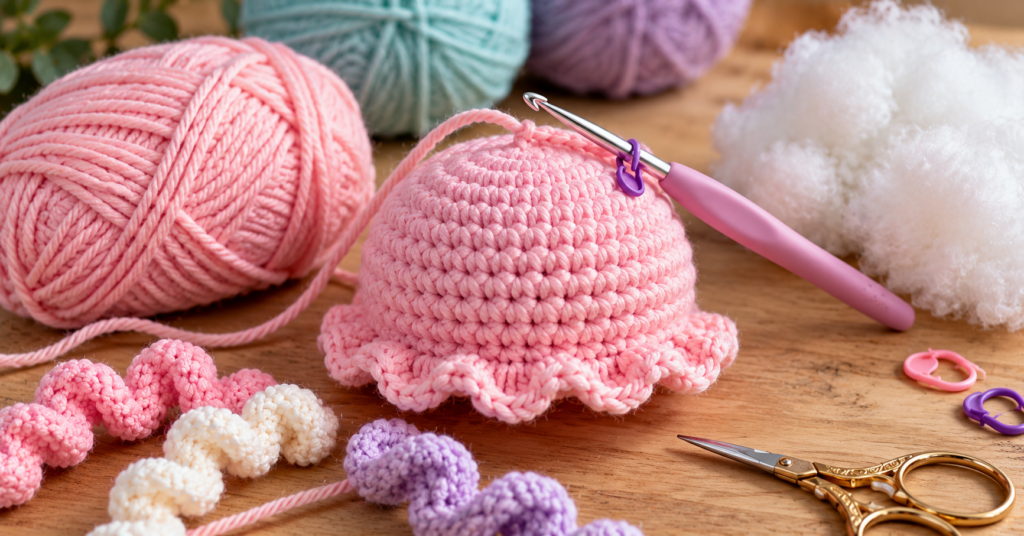
Instead of worrying about complicated shaping, think of the project in three parts:
1. The body
Create the rounded upper section.
2. The tentacles
Make several hanging strands underneath.
3. The face and finishing details
Add eyes, cheeks, embroidery, or other decorations.
Keeping the project separated into these parts makes it much easier to understand.
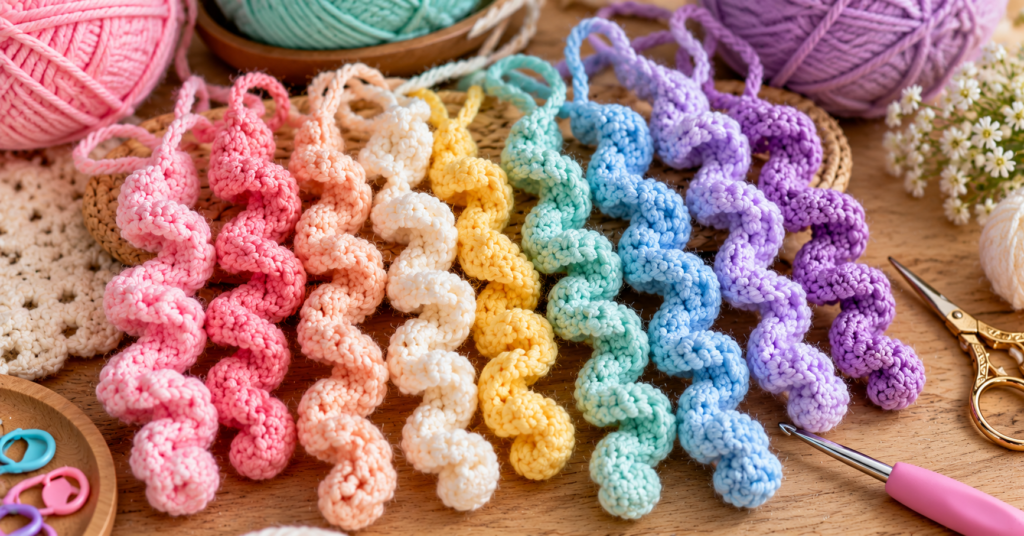
How to Make Curly Jellyfish Tentacles
The tentacles are probably the most fun part.
One easy approach is to create a chain and work several stitches back along the chain. Because multiple stitches are packed into a smaller space, the strip naturally starts to curl.
You can make the tentacles:
- Short and chunky
- Long and curly
- Thin and delicate
- Multicolored
- Uneven for a playful look
Try making each tentacle slightly different. Perfect symmetry is not necessary, and a little variation can actually make the finished jellyfish look more handmade.
How Many Tentacles Should a Crochet Jellyfish Have?
There is no rule that says your jellyfish needs a specific number.
A small jellyfish might look great with just a handful of tentacles, while a larger plush can have many more.
What matters most is spacing.
Spread the tentacles around the underside rather than putting them all in one small area. This gives the finished piece a fuller and more balanced appearance.
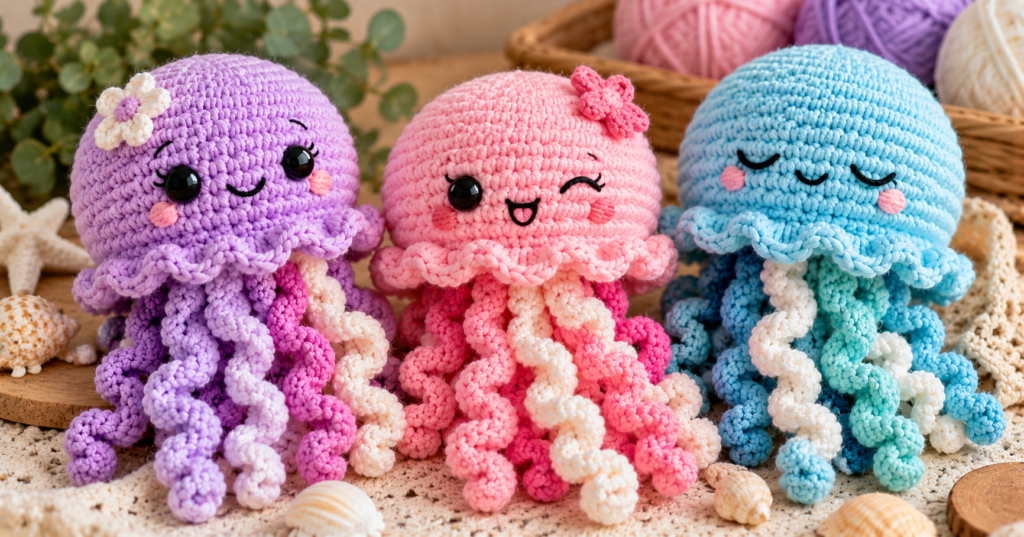
Adding a Cute Face
This is where your jellyfish starts getting a personality.
You can use safety eyes for a classic amigurumi appearance, or embroider the eyes with yarn if you prefer a softer handmade look.
You can also add:
- Tiny embroidered cheeks
- A little smile
- Eyelashes
- Different eye shapes
- Blush details
A very simple face can completely change the personality of the same jellyfish.
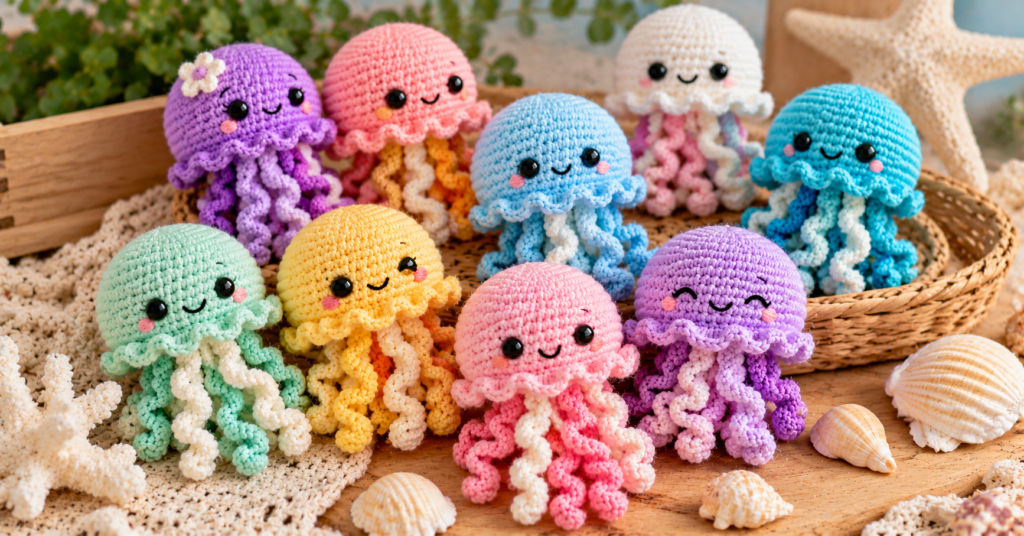
Cute Color Combinations to Try
One of the best things about making a crochet jellyfish is choosing the colors.
Here are a few combinations worth trying:
Ocean Blue
Blue body with turquoise and white tentacles gives a classic underwater feeling.
Pastel Dream
Try lavender, baby pink, mint, and cream for a soft kawaii look.
Sunset Jellyfish
Coral, peach, yellow, and warm pink create a brighter design.
Deep Sea
Dark blue, purple, teal, and a little silver can create a more mysterious jellyfish.
Rainbow
Use a different color for each tentacle. This is especially cute for small amigurumi projects.
Mini Crochet Jellyfish
Small jellyfish are perfect when you want something quick.
They can become:
- Keychains
- Bag charms
- Desk decorations
- Small gifts
- Party favors
Because they use less yarn than a large plush, mini versions are also a great way to use scraps from previous crochet projects.
Large Crochet Jellyfish
Want something more dramatic?
Scale up your yarn and hook and create a much larger jellyfish.
A large version can work as:
- A plush toy
- Nursery decoration
- Ocean-themed room decor
- Photography prop
- Handmade gift
The basic concept stays the same; you are simply changing the scale.
No-Sew Crochet Jellyfish Ideas
If you dislike sewing crochet pieces together, you can design the project so that fewer parts need to be attached separately.
For example, the tentacles can be incorporated directly into the lower section rather than being made as completely separate pieces.
A no-sew construction can make the project faster, especially when you are making several jellyfish.
Crochet Jellyfish for Beginners
This is one reason jellyfish are such a nice introduction to amigurumi.
You get practice with:
- Working in rounds
- Counting stitches
- Increasing
- Decreasing
- Maintaining tension
- Stuffing
- Basic finishing
You do not need to start with a complicated character or animal. A simple jellyfish can teach you several techniques that will be useful in future amigurumi projects.
Common Mistakes to Avoid
A few small mistakes can change the shape of your jellyfish.
Losing Track of Your Rounds
Use a stitch marker at the beginning of each round.
Making the Fabric Too Loose
Large holes can make the stuffing visible. If this happens, try a smaller hook.
Overstuffing
Adding too much stuffing can stretch the stitches and make the body look uneven.
Add stuffing gradually and shape the body with your fingers as you go.
Uneven Tentacles
Try to distribute them around the bottom rather than attaching everything in one place.
How to Make Your Jellyfish Look More Professional
Small details make a big difference.
Keep your tension consistent, hide yarn ends carefully, and take your time when attaching the face.
If you are making several jellyfish for a craft market, choose a small collection of color palettes instead of making every piece completely random.
This creates a more cohesive collection.
Can You Sell Crochet Jellyfish You Make?
Yes, handmade crochet jellyfish can be suitable for craft fairs, online shops, gifts, and seasonal markets.
The important thing is to understand the rights attached to the specific pattern you use.
A designer’s pattern may have restrictions about selling the written pattern, finished products, photos, or using the designer’s name.
Always check the original designer’s terms before selling finished items made from someone else’s pattern.
Crochet Jellyfish as Gifts
A handmade jellyfish can make a surprisingly sweet gift.
It works especially well for people who love:
- Ocean themes
- Cute animals
- Handmade crafts
- Amigurumi
- Kawaii-style decorations
You can personalize the colors to match the recipient’s favorite palette.
Crochet Jellyfish Nursery Decor
A collection of handmade jellyfish can also work beautifully with an ocean-themed nursery.
Instead of making every jellyfish identical, try different sizes and colors.
For wall or hanging decorations, however, make sure any small detachable components are appropriate for the intended environment, especially around young children.
How Long Does It Take to Crochet a Jellyfish?
The time depends on the size, yarn, stitch pattern, and your experience.
A small beginner project may be finished relatively quickly, while a larger plush with detailed tentacles and decorations can take considerably longer.
The nice thing is that you can stop after the basic body and still have a recognizable jellyfish shape.
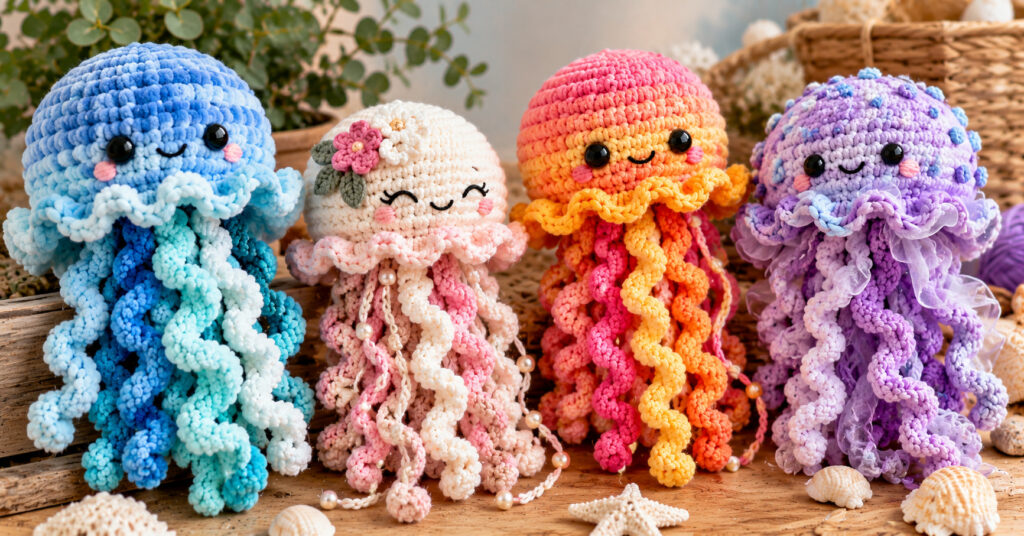
How to Customize Your Jellyfish
Once you understand the basic construction, the possibilities open up.
Try changing:
- Body size
- Tentacle length
- Tentacle thickness
- Number of tentacles
- Yarn texture
- Color palette
- Facial expression
- Embroidery details
You could even create an entire collection where every jellyfish has its own personality.
Easy Crochet Jellyfish Project for Your Next Afternoon
If you are looking for a small project that does not require a huge commitment, a crochet jellyfish pattern is worth adding to your list.
It is simple enough to be approachable, but there are enough opportunities for customization to keep it interesting.
Start with one color. Then make another with contrasting tentacles. After that, try a pastel version or a fluffy yarn.
You may end up making more than one.
Final Thoughts
A crochet jellyfish is a perfect example of how a simple crochet shape can become something full of personality.
You do not need dozens of complicated stitches or expensive supplies. With some yarn, a suitable hook, stuffing, and a little patience, you can create a cute little ocean friend that is completely your own.
Start simple, experiment with the colors, and do not worry if your first jellyfish is not perfectly symmetrical. Handmade pieces are supposed to have a little character.
And once you make your first one, you might find yourself thinking about what color your next jellyfish should be.