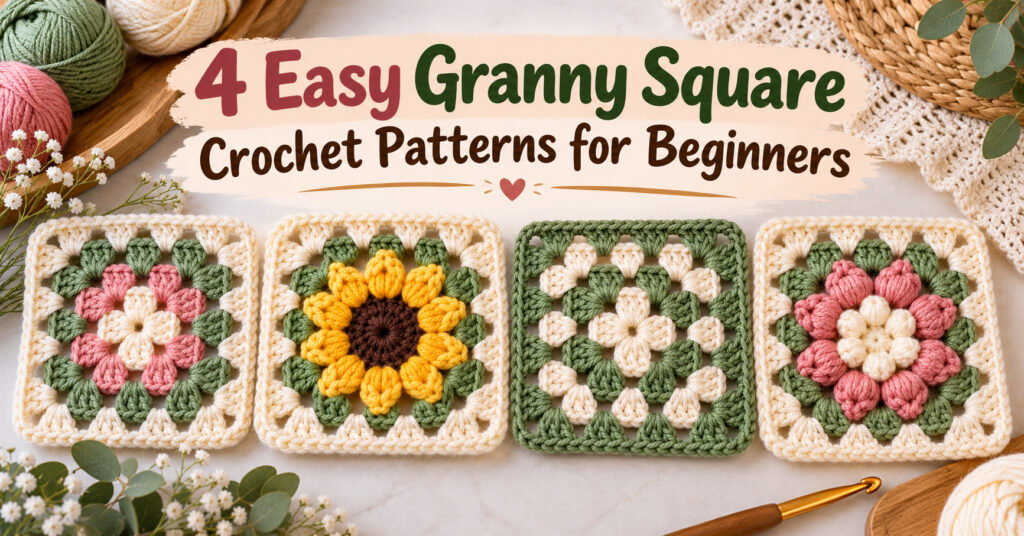
Granny squares are one of those crochet projects that never really go out of style. They are small enough to finish in one sitting, but you can combine them to create something much bigger.
If you are new to crochet, granny squares are also a great way to practice working in rounds, changing colors, counting stitches, and keeping your tension even.
In this guide, you’ll find 4 easy granny square crochet patterns for beginners, including a simple classic square, a colorful floral-inspired design, a two-color geometric square, and a textured version for anyone who likes extra dimension.
The best part? You can mix the designs together to create blankets, bags, cushions, table runners, and other handmade projects.
What You Need to Make Granny Squares
You don’t need a huge collection of supplies to get started.
Basic supplies
- Medium-weight yarn
- Crochet hook suitable for your yarn
- Scissors
- Yarn needle
- Stitch marker, if needed
For beginners, a medium-weight yarn is usually easier to handle because the stitches are easy to see.
Choose two or three colors if you want your squares to have more contrast. You can also use leftover yarn from previous projects, which makes granny squares a great stash-busting project.
Related : 12 Beautiful Granny Square Blanket Ideas to Crochet
1. Classic Easy Granny Square
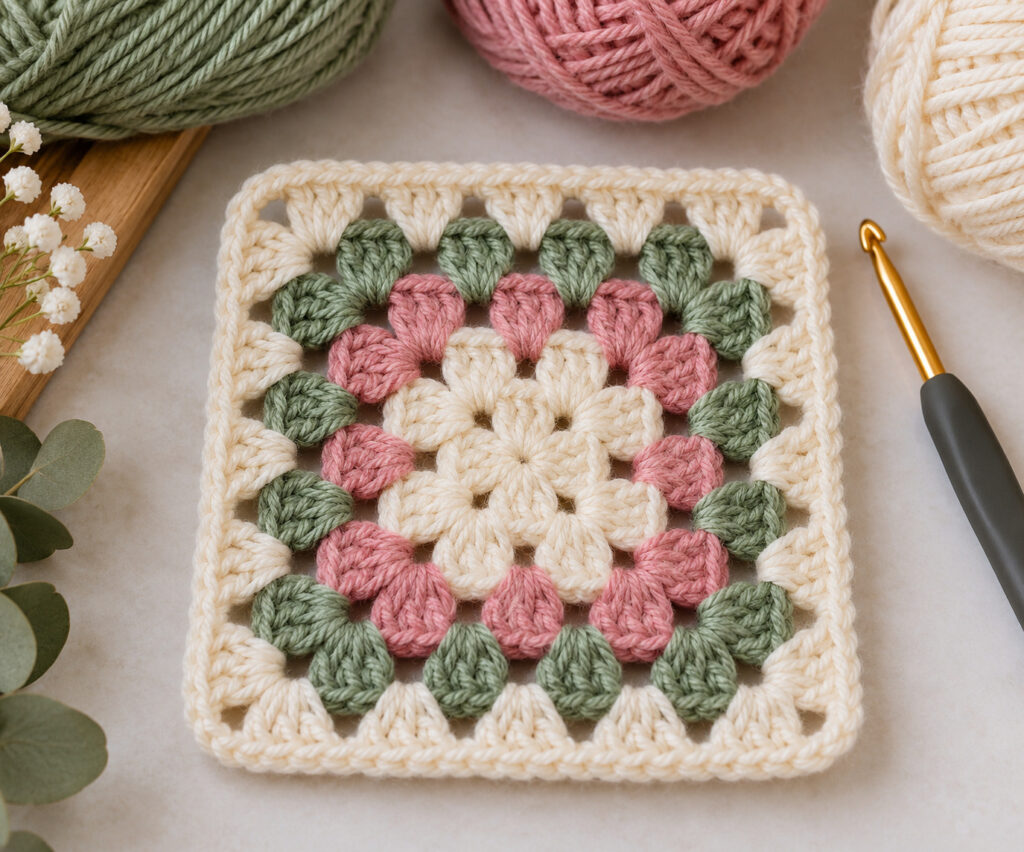
If this is your first granny square, start here.
The classic version uses simple groups of double crochet stitches separated by chain spaces. Once you understand the repeating pattern, you can make square after square without having to constantly check your instructions.
Basic idea
Start in the center and work outward in rounds.
Each round builds on the previous one, while the four corners create the square shape.
For a beginner-friendly version:
- Make a magic ring, or create a small chain ring.
- Work your first groups of double crochet stitches into the center.
- Use chain spaces to separate the groups.
- Build four clear corners.
- Continue adding rounds until the square reaches the size you want.
- Fasten off and weave in your ends.
Beginner tip
Don’t pull your stitches too tightly. A relaxed tension will make the corners easier to form and will help keep the square flat.
If your square starts curling, check your tension before adding another round.
2. Simple Sunflower-Inspired Granny Square
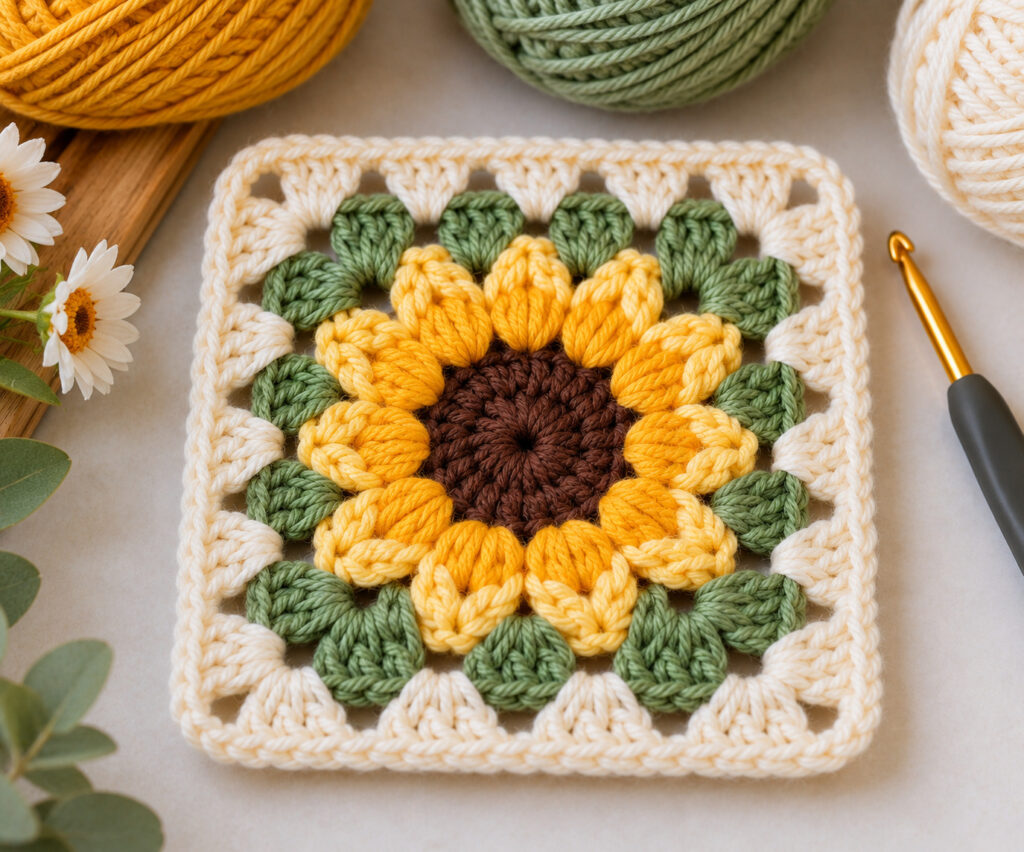
Want something more colorful?
A flower-centered granny square can completely change the look of a crochet project. Instead of a plain center, you create a small floral motif and then build the square around it.
Sunflower-style granny squares commonly use a dark center, warm yellow petals, and a contrasting outer color. Floral granny squares are especially popular for blankets, bags, cushions, and decorative panels.
Color combination idea
Try:
- Dark brown for the center
- Golden yellow for the petals
- Cream or green for the outer rounds
How the design works
Start with a small circular center. Add a textured or clustered round to create the flower effect, then work additional rounds that gradually turn the circle into a square.
You don’t have to use traditional sunflower colors, either.
Try:
- Pink + burgundy + cream
- Lavender + purple + white
- Orange + rust + beige
- Blue + mustard + cream
Helpful tip
If the floral center makes your square ripple, don’t immediately add more stitches. Uneven tension or too many increases can cause the fabric to wave. Keeping your tension consistent and lightly blocking the finished square can help.
Related : 15 Free Crochet Bag Patterns You’ll Love to Make
3. Two-Color Geometric Granny Square
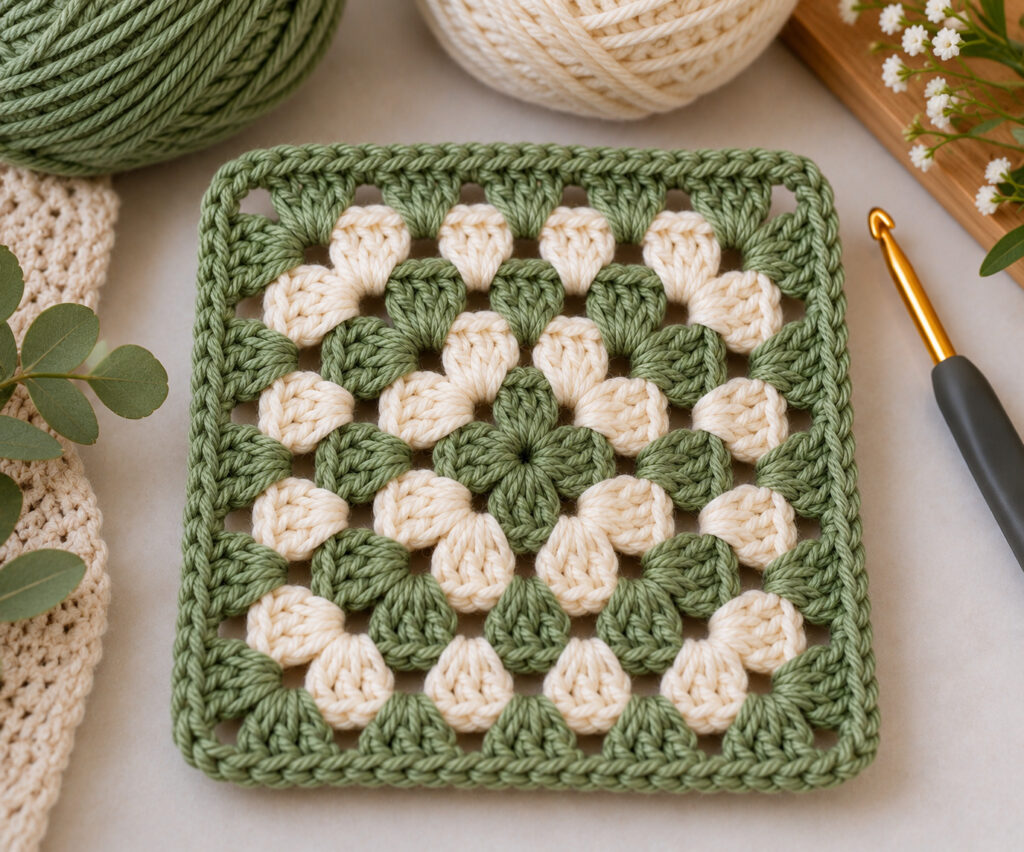
For a cleaner and more modern look, try a two-color granny square.
This design is especially useful if you like simple crochet projects but don’t want every square to look exactly the same.
Choose one main color and one contrasting color.
For example:
Cream + sage green
or
Black + ivory
or
Terracotta + beige
How to create the effect
Work the center using your first color, then introduce the second color in a later round.
The contrast between the colors creates a geometric appearance without requiring complicated stitches.
You can also alternate the colors from one round to the next.
For a blanket, try making:
- 25% light squares
- 25% dark squares
- 50% mixed-color squares
Then arrange them before joining.
Beginner tip
When changing colors, leave enough yarn for weaving in later. Cutting the yarn too short can make finishing much more frustrating.
4. Textured Granny Square
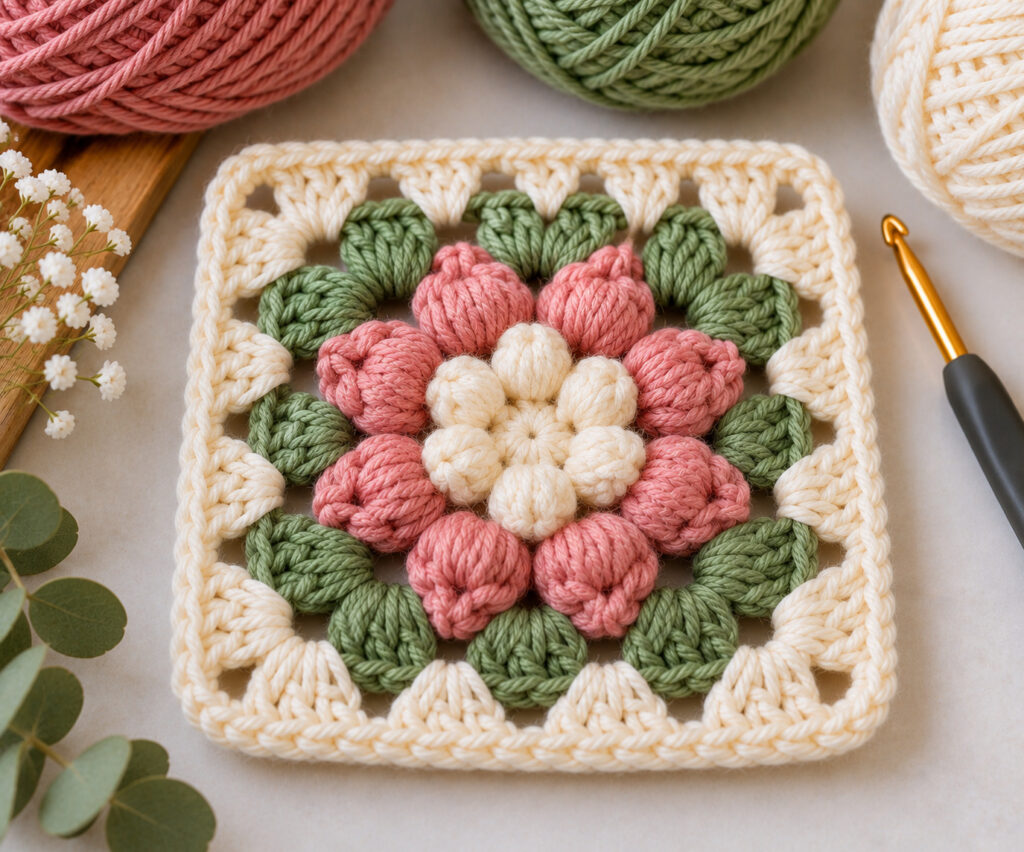
If you love crochet with a little extra dimension, a textured granny square is worth trying.
Instead of relying only on basic granny clusters, you can introduce stitches such as popcorn, puff, or bobble-style stitches.
Textured flower granny squares often use raised stitches to make the center or petals stand out from the background.
Why beginners might like it
You don’t need to use texture throughout the entire square.
A simple approach is:
- Keep the outer rounds basic
- Add texture to the center
- Use a contrasting color for the textured section
This gives you an impressive-looking square without making the entire project complicated.
A useful tip
Keep the textured stitches relaxed.
If you make every puff or popcorn stitch extremely tight, the square can become smaller than the surrounding rounds and may start pulling inward.
How to Keep Granny Squares the Same Size
This becomes especially important when you’re making a blanket.
Even a small difference between squares can become noticeable when you join dozens of them together.
Try these habits:
Use the same yarn weight
Mixing bulky yarn with lightweight yarn will naturally create different-sized squares.
Keep your hook size consistent
Use the same hook unless you’re intentionally changing your gauge.
Check your tension
If one square is noticeably smaller, your stitches may be tighter.
Measure as you go
Don’t wait until you’ve finished 30 squares to discover that they are different sizes.
Make one sample square first and use it as your reference.
Why Is My Granny Square Curling?
A little curling can happen, especially while you’re working on a new project.
Common reasons include:
- Tight crochet tension
- Too few chain spaces
- Too many stitches
- Incorrect increases
- Uneven tension between rounds
Before changing your entire pattern, check whether your tension is the problem.
Blocking can also help straighten finished squares, especially when you want several motifs to have exactly the same dimensions.
How Can You Use Granny Squares?
This is where granny squares become really fun.
Once you’ve made a collection, you can combine them into larger projects.
Granny square project ideas
- Crochet blankets
- Tote bags
- Crossbody bags
- Pillow covers
- Baby blankets
- Cardigans
- Vests
- Table runners
- Coasters
- Wall decorations
- Small pouches
You can even combine different granny square designs in the same project.
For example, use classic squares as the background and place a few floral squares throughout the design.
How to Join Granny Squares
Once your squares are finished, you have several options for joining them.
A simple method is to place two squares together and use slip stitches or single crochet along the edges.
For a flatter appearance, you can also sew the squares together using a yarn needle.
Whichever method you choose, try joining two test squares first.
This lets you see how the seam looks before committing to an entire blanket.
How Many Granny Squares Do You Need for a Blanket?
There isn’t one fixed number because it depends on the size of your squares and the finished blanket.
For example:
- 4 × 5 squares = 20 squares
- 5 × 6 squares = 30 squares
- 6 × 7 squares = 42 squares
- 8 × 10 squares = 80 squares
Make one square first, measure it, and then plan your blanket dimensions around that measurement.
Frequently Asked Questions
Are granny squares easy for beginners?
Yes. Classic granny squares are one of the more approachable crochet projects because the same stitch pattern repeats around the square.
What yarn is best for granny squares?
Medium-weight yarn is a good starting point because it is easy to see and handle. Cotton and acrylic yarn can both work well depending on the project.
What crochet hook should I use?
Use the hook recommended on your yarn label as a starting point. You can adjust the size if your stitches are too tight or too loose.
Why are my granny squares different sizes?
The most common causes are different tension, different yarn, or changes in hook size. Try to keep all three consistent.
Can I mix different granny square patterns?
Absolutely. Mixing simple, floral, geometric, and textured squares can make a blanket much more interesting.
How do I make my granny square flat?
Keep your tension consistent and make sure the increases and corner spaces are correct. If necessary, gently block the finished square.
Final Thoughts
Granny squares don’t have to be complicated to look beautiful.
Start with the classic design if you’re completely new to crochet. Once you’re comfortable working in rounds, experiment with color changes, floral centers, geometric combinations, and textured stitches.
The real beauty of granny square crochet is that every small square can become part of something much bigger.
Choose your favorite colors, make a few squares, and see where the project takes you.
Happy crocheting! 🧶